
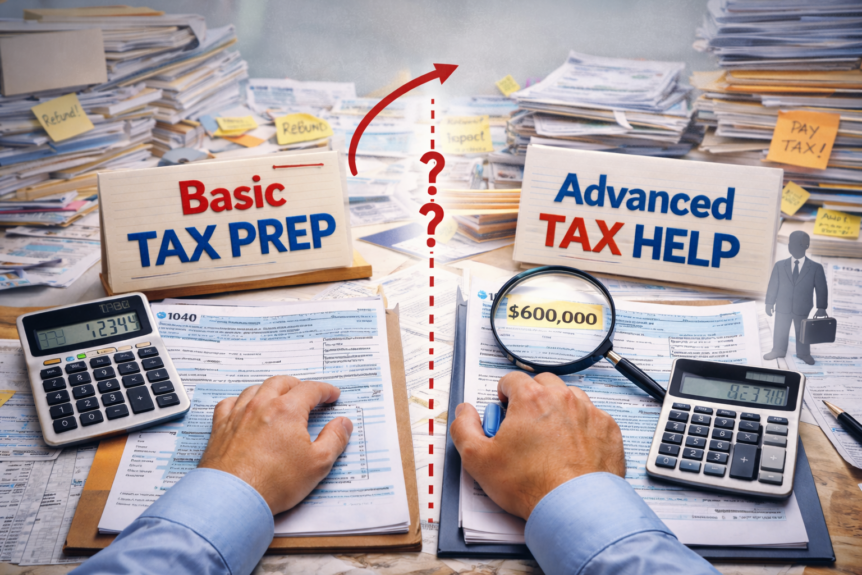
There’s no magic income number where tax prep suddenly stops being effective.
Instead, there’s a point where complexity overtakes simplicity.
For many people, that point arrives when income growth brings more decisions:
- Multiple income streams
- Equity compensation
- Meaningful investment assets
- Retirement planning that intersects with taxes
At that stage, the question is no longer whether your return is filed correctly.
It becomes whether the structure of your financial life is efficient.
Basic tax prep answers questions like:
- What do I owe?
- Did I file correctly?
Tax planning answers different questions:
- Should this income be recognized now or later?
- Which accounts should I draw from first?
- How do taxes interact with long-term goals?
Once you have options, not evaluating them becomes a decision in itself.
Many high earners assume tax planning is about complexity for complexity’s sake. In reality, it’s about clarity. It helps people understand the tradeoffs between different paths before they’re locked into one.
That’s usually the moment when basic tax prep stops being enough — not because it’s wrong, but because it’s incomplete.
Wondering if you’ve outgrown basic tax prep?
Many people don’t realize they’ve crossed the complexity threshold until they feel uncertainty creeping in. A planning-focused discussion can help determine whether your situation still fits within traditional tax prep or if a more coordinated approach would be beneficial.