
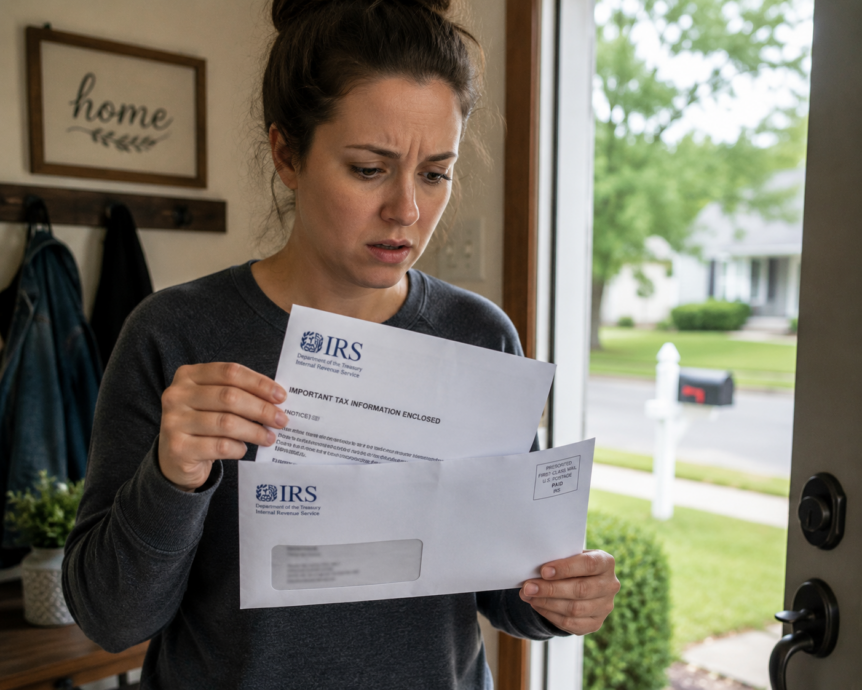
If you have been checking your bank account every morning only to find your tax refund still missing, you are certainly not alone. While the IRS started the 2026 season with a promise of modernization, the reality on the ground has become a bit more complicated for many taxpayers. We are seeing a significant uptick in mailed correspondence, and for a specific group of filers, “Where’s My Refund?” is stuck in a loop.
Here is a look at what is actually happening behind the scenes and how to manage the delays.
The Paper Check Phase-Out Friction
The biggest “new” factor this year is the IRS initiative to modernize payments. Under a recent executive order, the agency is aggressively phasing out paper refund checks in favor of digital disbursements. While this sounds efficient, the transition has created a significant hurdle: The CP53E Notice.
If you did not provide valid direct deposit information on your return, the IRS is no longer automatically mailing a check. Instead, they are “freezing” the refund and sending a letter (the CP53E) asking you to log into your IRS Online Account to provide banking details.
- The Delay: You generally have 30 days to act. If you do nothing, the IRS will eventually mail a check, but only after an additional six-week waiting period.
- The Solution: If you receive this notice, do not ignore it. Setting up an IRS Online Account is now a functional necessity for timely refunds.
Slower Processing for Paper and Correspondence
While electronic returns are still moving relatively quickly (usually within 21 days), the “back office” of the IRS is feeling the weight of budget and staffing shifts. Currently, the IRS is still working through individual correspondence from February and business correspondence dating back to late 2025.
If your return required a manual review due to an error or a missing signature, you are likely looking at months, not weeks, for a resolution. This “correspondence gap” is where most of the current frustration lies.
The “Overtime Deduction” Complications
There is another specific issue surfacing this year regarding the new tax breaks on overtime income. Reports suggest that nearly 20% of filers are claiming this deduction, which is far higher than the IRS anticipated. Because this is a new and complex provision, the IRS is flagging a higher volume of these returns for manual verification to prevent fraud. If you claimed this deduction, your return might be sitting in a “review” pile even if your math was perfect.
What Else is Going On?
Beyond the refund delays, a few other updates are worth noting for your financial planning:
- New Online Debt Tools: The IRS recently launched a streamlined online tool to help taxpayers resolve tax debt and set up payment plans without having to call a representative.
- ERC Disallowance Options: For business owners, the IRS has introduced a new way to request more time to respond to Employee Retention Credit (ERC) disallowances. This is a move to help businesses avoid immediate litigation while they gather documentation.
- Expansion of Business Accounts: The “Business Tax Account” platform has expanded. Partnerships and tax-exempt organizations now have better self-service options to view transcripts and digital notices.
Pragmatic Next Steps
If your refund is delayed, the first step is to check your IRS Online Account rather than just the “Where’s My Refund?” tool. The online account will show you if a specific notice (like that CP53E) has been issued before it even arrives in your physical mailbox.
In a year of shifting digital goalposts, staying proactive with your digital IRS profile is the best way to ensure your money makes it to your pocket.